Roman Theater Alexandria: A Guide to Kom El Dikka’s Theater
The Roman Theater in Alexandria gives travelers a rare look at a Roman performance space preserved within Kom El Dikka, one of the city’s most important archaeological zones. Its 1963 discovery, 800-seat capacity, and distinctive use of marble and mosaic make it one of the clearest places in Alexandria to connect urban history with ancient public life.


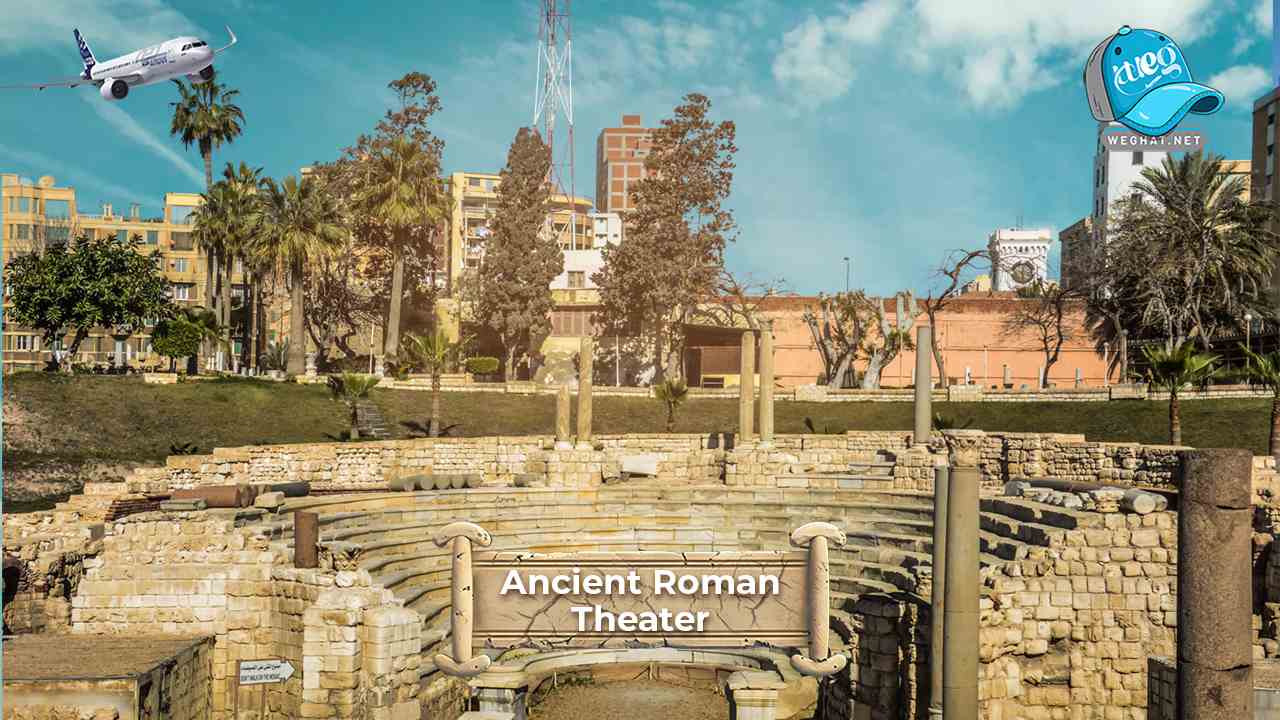
Table of contents
History of the Roman Theater in Alexandria
Establishment of the Theater
The Roman Theater in Alexandria dates back to the 4th century AD, during the Roman Empire’s rule over Egypt. At that time, Alexandria was one of the most significant cities in the ancient world, renowned for its rich culture and status as a hub of knowledge and intellectual life. The theater was constructed in the heart of the city to serve as a center for entertainment and leisure for the citizens, hosting theatrical performances and public celebrations.
Although referred to as a “theater,” this structure may have also been used for other purposes, such as public meetings or parties, making it a multifunctional venue. The Roman Empire was keen on providing public spaces for entertainment and discussions, and the Roman Theater in Alexandria embodied this vision.
Discovery of the Theater
The Roman Theater remained buried underground for many centuries until it was discovered by chance in 1960 during excavation and construction work in the “Kom El-Dikka” area. Initially, the discoverers did not realize they were uncovering a major archaeological find, as the excavations were conducted for the purpose of residential development. However, as the digging continued, the theater’s seating areas were revealed, which led to a shift in the focus of the excavation towards preserving the site as an archaeological landmark.
Since its discovery, the Roman Theater has become a focal point for archaeologists and researchers, with further details about its design, usage, and history being uncovered. It has been carefully restored to become one of Egypt’s most famous archaeological sites, attracting visitors from around the world.
Architectural design
The seating
The Roman theater in Alexandria consists of semi-circular seating, a design commonly found in ancient Roman theaters. There are 13 rows of white marble seats, which rise gradually, allowing the audience to have a clear view of the performances held in the lower arena. The seating is carefully constructed to provide clear acoustics even for the seats at the back, showcasing the Romans’ expertise in sound design.
Columns
The theater contains several marble columns that decorated the structure, representing a blend of Roman and Byzantine styles. The columns extend around the central arena, forming a beautiful architectural frame for the theater, and they once supported the wooden roof that covered some sections of the seating to protect spectators from the sun or rain.
Mosaic floors
One of the most distinctive features of the Roman theater is the mosaic floors discovered at the site. These floors are decorated with intricate geometric patterns, made from small pieces of colored stone, and are an example of the luxurious Roman art used to adorn both public and private spaces. These mosaics reflect the level of sophistication available to the people of Alexandria during that period.
Activities and uses
Theatrical performances
As with most Roman theaters, the theater was primarily used for theatrical performances. Roman plays ranged from comedic to tragic performances, attracting a large audience of citizens who sought enjoyment through art and literature.
Public meetings
In addition to artistic performances, the theater was also used as a platform for public meetings, where Roman officials would meet with citizens to discuss public matters or make official announcements. These meetings reflected the partial democratic nature of some Roman cities, where there was direct interaction between the government and the people.
Archaeological significance of the theater
A historical site of diverse cultures
The Roman theater in Alexandria is one of the most prominent witnesses to the city’s long history. It represents an important period in Alexandria’s history when it was part of the Roman Empire. It reflects the diverse character of the city, which was a crossroads of various civilizations and cultures.
A source of knowledge for researchers
The Roman theater is a valuable resource for researchers in the fields of archaeology and history, as it provides an in-depth look at Roman architecture and the uses of theaters during that time. Additionally, ongoing excavations in the surrounding area of the theater continue to uncover more secrets about the lives of Alexandrians in ancient times.
Roman Theater in Tourism
Tourist tours
Regular tours to the Roman theater are organized, where visitors can explore this historic site with qualified guides who provide valuable information about the theater’s history and its uses. The tour offers an opportunity to learn about the theater’s design and architecture, and to enjoy viewing the mosaics and marble columns.
Location and tourist facilities
The theater is located in the Kom El-Dikka area in the center of Alexandria, making it easily accessible from various parts of the city. In addition to the theater itself, visitors can enjoy a tour of the surrounding area, which includes many other archaeological sites and historical landmarks. The area also has restaurants and cafes, offering visitors a chance to relax after an enjoyable tour of the theater.
Conclusion
The Roman Theater is one of the most famous tourist attractions in Alexandria and a remarkable archaeological treasure that tells the story of a civilization that spanned many centuries. With its terraced stone walls and scattered marble columns, the theater offers a window into the city’s history, stretching across many eras.
Although it was only discovered in the 20th century, this site quickly became one of the most visited tourist landmarks, drawing visitors from all over the world to explore this great archaeological monument. It provides a wonderful experience for seeing Roman history and art while offering a glimpse into the daily life of Alexandria’s inhabitants during that period.
Now that you’ve learned the key information about Roman Theater in Alexandria, you can explore more tourist places in Alexandria.
You can also check out the most famous tourist places in Egypt.
To visit our official Facebook page.
Frequently Asked Questions
What is the Roman Theater in Alexandria?
It is a small Roman theatre inside Kom El Dikka, Alexandria’s largest and most complete above-ground archaeological site.
Why is the Roman Theater in Alexandria important?
It is important because it shows how Roman Alexandria worked as a civic and cultural city, with space for entertainment and public life.
How many people could the Roman Theater seat?
The theatre is noted as seating up to 800 people, making it smaller than major Roman theatres but still significant for Alexandria’s urban history.
When was the Roman Theater discovered?
It was discovered in 1963, which is why it remains one of Alexandria’s relatively later-discovered archaeological landmarks.
What can you see at the Roman Theater?
Visitors can see marble, green marble, red granite, mosaic, arches, and stone elements, along with the theatre’s seating and overall Roman layout.
Was the Roman Theater only for performances?
Not necessarily. Sources on Kom El Dikka indicate that the theatre may also have been used for city council meetings, public orations, musical performances, wrestling, and other forms of civic life.